

At the 20th International Symposium on Carotenoids in Palma, Illes Balears, Spain, the following awards were presented to outstanding carotenoid scientists who have made significant contributions to the carotenoid field.
Trevor Goodwin Award (for achievement in research on Carotenoid Biochemistry and a lifetime of dedicated service to the carotenoid field) – Dr. Paul Bernstein
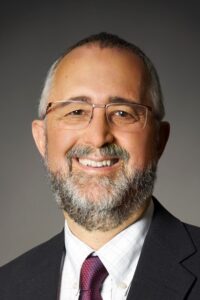
Dr. Paul Bernstein
Paul S. Bernstein, MD, PhD joined the faculty of the Moran Eye Center of the University of Utah in 1995 where he currently divides his time equally between clinical and basic science retina research and a clinical practice devoted to medical and surgical treatment of diseases of the retina and vitreous with special emphasis on macular and retinal degenerations. He was promoted to Professor of Ophthalmology and Visual Sciences in 2007 and was awarded an endowed professorship in 2008. Dr. Bernstein did his undergraduate, MD and PhD training at Harvard University, his ophthalmology residency at Jules Stein Eye Institute of UCLA, and his vitreoretinal fellowship at Massachusetts Eye & Ear Infirmary. Dr. Bernstein has authored over two hundred peer-reviewed research articles and reviews as well five patents, and he has served as a reviewer for numerous journals, foundations, and institutes. In 2016, he was awarded the American Academy of Ophthalmology’s Outstanding Humanitarian Award for his work training aspiring retina specialists in Nepal, Bhutan, Ethiopia, and Ghana. He delivered the Mildred Weisenfeld Award Lecture to the annual meeting of the Association for Research in Vision and Ophthalmology (ARVO) in 2021 and the James A. Olson Memorial lecture at the CARIG satellite meeting of the American Society for Nutrition in 2025. Dr. Bernstein was a principal investigator for the AREDS2 study, and he currently serves as the Vice-Chair for Clinical and Basic Science Research at the Moran Eye Center. He was vice-president of ARVO from 2016-2017 and served on the ICS Board from 2011 to 2014. He has attended every ICS meeting since 1999, and he hosted the 17th International Symposium on Carotenoids held in Park City, Utah in 2014.
Dr. Bernstein’s PhD work with Dr. Robert Rando elucidated the fundamental biochemistry underlying the vertebrate visual cycle of rhodopsin regeneration. Using double-label experiments, he proved that retinoid isomerization in the living eye occurs at the alcohol oxidation state, and he developed the first successful enzymatic assays for the isomerization of all-trans-retinoids to 11-cis-retinoids in the retinal pigment epithelium (RPE). This enzymatic activity ultimately proved to be RPE65, the key enzyme of the visual cycle and the genetic basis of some forms of Leber’s congenital amaurosis and retinitis pigmentosa. He also pioneered the field of pharmacological inhibition of the visual cycle, an approach now in clinical trials for age-related macular degeneration and Stargardt disease.
When Dr. Bernstein joined the faculty at the Moran Eye Center of the University of Utah, he shifted from the retinoid field to the macular pigment carotenoids, lutein, zeaxanthin, and meso-zeaxanthin. These colorful, C40H56 isoprenoid compounds are derived exclusively from the diet and are specifically concentrated in the human macula lutea where they protect against age-related macular degeneration (AMD) and improve visual function. His long-term goal has been to understand at a molecular level the biochemical mechanisms governing the specific uptake and stabilization in the eye and to explore their protective mechanisms of action. His laboratory has identified and characterized the specific high affinity binding proteins for the macular pigment carotenoids: StARD3 (lutein) and GSTP1 (zeaxanthin and meso-zeaxanthin) and discovered that deficient cleavage activity of primate BCO2 is a key reason why monkeys and humans are the only mammals that specifically accumulate these carotenoids in the retina. He subsequently showed that RPE65 is the enzyme responsible for conversion of lutein to meso-zeaxanthin in the human eye.
When Dr. Bernstein entered the carotenoid field, it was clear that objective, image-based, noninvasive assessment of macular pigment levels would be fundamentally important for the clinical characterization of the role of lutein and zeaxanthin’s protection against AMD. He soon established a long-term collaboration with Dr. Werner Gellermann of the University of Utah physics department to develop novel techniques to measure and image carotenoids in ocular and other tissues using resonance Raman spectroscopy, autofluorescence, and reflectometry. This partnership has led to four patents and numerous publications. Their skin Raman spectrometer has been commercialized by NuSkin/Pharmanex to sell supplements, and collaborators have successfully used research versions in clinical nutrition studies. Their devices have been used in an ancillary study of AREDS2, and they were the first to report successful imaging of macular pigment in infants and young children. He used their ocular and skin carotenoid measurement devices in two investigator-initiated clinical trials, L-ZIP (NCT03750968) and MAGENTA (NCT05265624), funded by the National Eye Institute. More recently, his group pioneered the use of confocal resonance Raman microscopy to image the macular pigment carotenoids in tissuesections and dissociated foveal cells at unmatched resolution and specificity.
Otto Isler Award (for Lifetime Achievement in Carotenoid Chemistry) – Dr. József Deli
Dr. József Deli is professor emeritus at the University of Pécs, where he pursued his academic career from 1981 until his retirement in 2026.
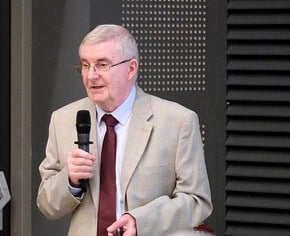
Dr. József Deli (professor emeritus)
He was born in Baja, Hungary in 1956. He graduated as a chemical engineer (1980) at the Veszprém University of Chemical Engineering. He obtained his PhD in chemistry in 1984. In 1986, he joined the carotenoid chemistry research group at the Department of Chemistry of the University of Medical School of Pécs, which was founded by László Zechmeister. In 2003, he became a doctor of the Hungarian Academy of Sciences (DSc). He has been a professor since 2004, deputy head of the Institute of Biochemistry and Medical Chemistry at the Medical School of the University of Pécs between 2004 and 2010, and head of the Institute of Pharmacognosy at the Faculty of Pharmacy of the University of Pécs between 2013 and 2021. From 2004 to 2026, he led the Research Group for Carotenoids, during which time he nurtured a new generation capable of carrying on the Zechmeister traditions while embracing new challenges.
His main research interests are the isolation and structure elucidation of carotenoids and the semisynthetic modification of them. Early in his career, he mainly focused on isolating and identifying the structure of carotenoids in peppers. He isolated and semi-synthetically produced numerous 3,5,6-trihydroxy- and 3,6-epoxy-carotenoids. The elucidation of these structures helped to clarify the biosynthesis of carotenoids containing the $\kappa$-end group. He also studied the occurrence and formation of $\kappa$-carotenoids in other plants (Lilium tigrinum, Asparagus and Aesculus species, Pouteria sapota, etc.). By combining classic column chromatography and modern HPLC techniques, he isolated and determined the structures of numerous carotenoids with new structures. Later, he also performed carotenoid analysis of numerous other plants (e.g., medicinal herbs) and algae. He successfully applied chiral separation to identify natural and semisynthetic carotenoid epoxides. He collaborated with numerous foreign and Hungarian researchers in studying the biological and physicochemical properties of carotenoids.
He elaborated various isolation and analysis methods for carotenoids which are used generally and daily in carotenoid research. He is one of the last experienced chemists who has a well-founded knowledge about the handling and the analysis of all kinds of carotenoids.
He is the co-author of 120 SCI-indexed publications and 7 book chapters in the field of carotenoid chemistry, with nearly 3,000 independent citations. He is the author or co-author of nearly 300 scientific lectures (poster or oral presentations).
He was a member of the local organizing committee of the First and Second Central and Eastern European Workshop on Carotenoids (Pécs, 1996, 1998), a member of the scientific committee of the 18th International Symposium on Carotenoids (Luzern 2017), and of the 8th International Congress on Pigments in Food (Cluj 2016), and conference co-chair and head of the scientific committee of the 6th International Congress on Pigments in Food in Budapest (2010). He is an active member of the International Carotenoid Society and was awarded Fellow of the International Carotenoid Society in 2017.
Norman I. Krinsky Award (for research in Nutrition and Disease Prevention) – Dr. Elizabeth Johnson

Dr. Elizabeth Johnson
Dr. Elizabeth Johnson was trained at the University of Wisconsin at Madison, where she received her master’s and Ph.D. in Nutritional Biochemistry. In 1988, she joined Tufts University at the Jean Mayer USDA Human Nutrition Research Center on Aging. In 1994, she became Assistant Professor and in 2011 Associate Professor at the Friedman School of Nutrition Science and Policy at Tufts University. Today, she is Adjunct Associate Professor at Tufts.
Her research interest is the absorption, distribution, and function of micronutrients and plant bioactives in the body and in different tissues. Her main focus is the role and function of carotenoids and retinoids for the maintenance of a healthy lifestyle and for disease prevention. A huge part of her more than 200 publications deal with nutritional compounds and eye and brain function throughout the lifespan.
Dr. Liz Johnson’s network is broad. She collaborated with many universities worldwide and with many major nutritional companies. She is a longstanding member of the ICS council and served as treasurer for the last 15 years. She was awarded ICS Fellow in 2017.
George Britton Young Investigator Award – Dr. Libo Tan
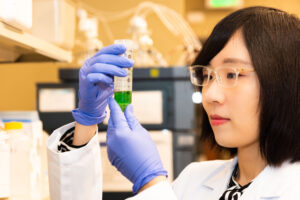
Dr. Libo Tan
Dr. Libo Tan is an Associate Professor in Human Nutrition at the University of Alabama. She received her Ph.D. in Nutritional Sciences from Pennsylvania State University. Dr. Tan started her research career with pioneering studies on the whole-body kinetics of vitamin A, culminating in the first compartmental model of vitamin A metabolism in neonates. This work provided key insights into the physiological differences in vitamin A homeostasis between newborns and adults. Since then, she has expanded her research to focus on carotenoid metabolism, particularly the bioavailability and physiological roles of lutein and zeaxanthin. She explores how these dietary carotenoids affect neonatal visual and cognitive development, elegantly bridging maternal-infant nutrition, food science, and kinetic modeling. This interdisciplinary approach has yielded important advances in understanding how carotenoids contribute to early-life health and long-term visual function. Dr. Tan has published 57 peer-reviewed papers in her career since 2012.
Dr. Tan currently serves on the steering committee of the ASN Carotenoids and Retinoids Research Interest Group (CARIG) and as Chair of the Membership Committee of the North America Chinese Association for Nutrition (NACAN). She also serves as Associate Editor for the Journal of Agriculture and Food Research and serves on the editorial boards of the Journal of Future Foods, Academia Nutrition and Dietetics, and Food, Nutrition and Health.